
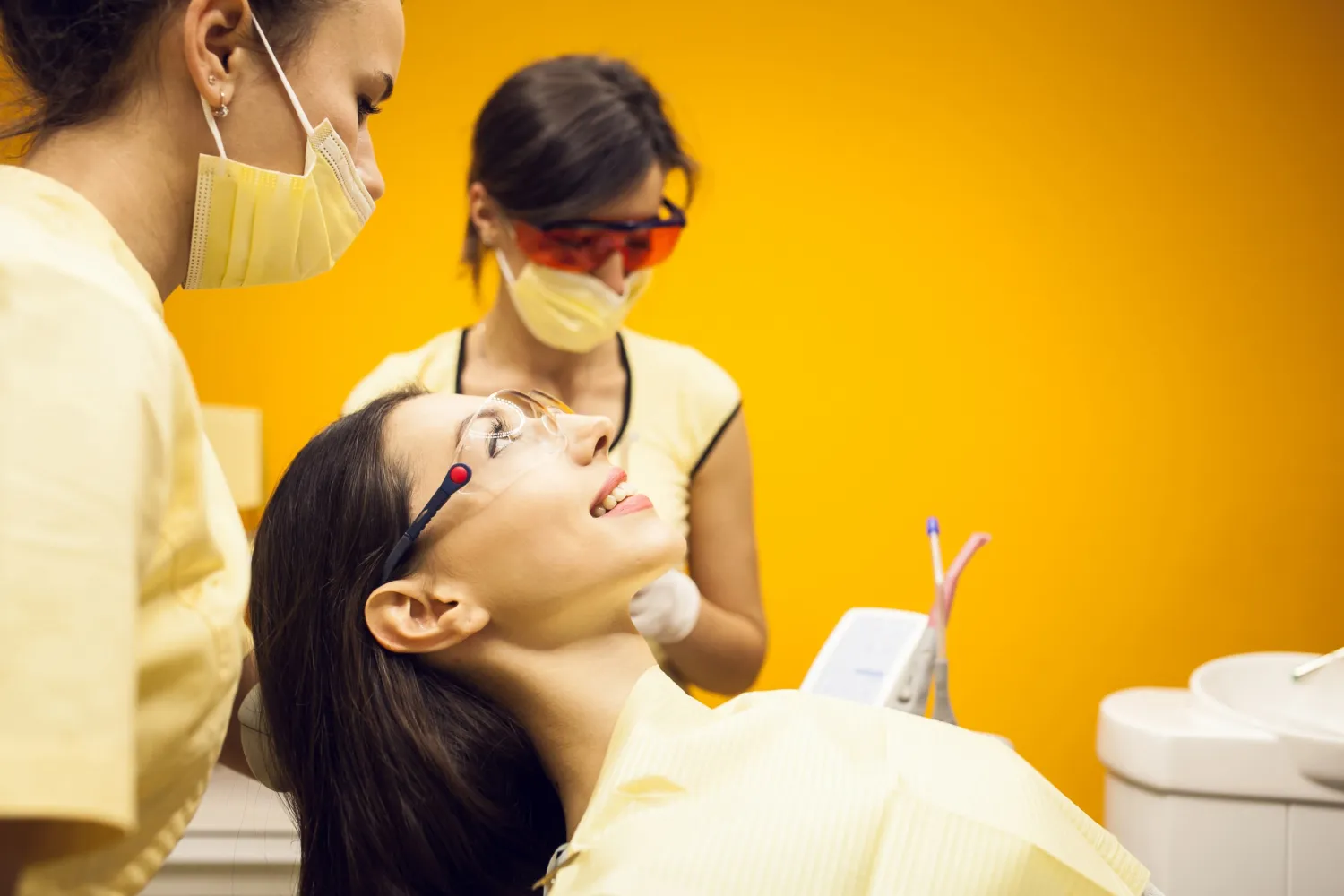
A bright smile is something most people want – but keeping teeth white is harder than it sounds. Over time, teeth can change colour for many different reasons. Some causes come from things we eat and drink every day. Others happen from deep inside the tooth – completely beyond our control. If your teeth have been looking less bright lately, understanding why it happens is the first step toward fixing it.
Teeth whitening in Fonthill is one of the most popular and effective solutions available today – and knowing your options helps you make the best choice for your smile.
What Is Tooth Discoloration?
Tooth discolouration simply means your teeth have changed from their natural colour. They may look yellow, brown, grey, or even have white spots in some cases.
There are two main types of tooth discoloration – staining on the outside and staining on the inside.
Staining on the Outside (Extrinsic Discoloration)
This type of staining sits on the surface of the tooth. It comes from things your teeth come into contact with every day.
Common causes include:
- Coffee and tea – they contain tannins that stick to tooth enamel over time
- Red wine – its deep colour, acidity, and tannins make it one of the biggest staining culprits
- Tobacco use – smoking or chewing tobacco causes some of the most stubborn stains
- Dark – coloured sauces – soy sauce, tomato sauce, and balsamic vinegar all stain teeth
- Berries and dark fruits – blueberries, blackberries, and pomegranate are common offenders
- Poor brushing habits – plaque that is not removed regularly makes staining much worse
The good news is that surface stains respond very well to teeth whitening in Fonthill.
Staining on the Inside (Intrinsic Discoloration)
This type of staining comes from inside the tooth itself. It affects the inner layer of the tooth—called dentine—and shows through the outer enamel.
Common causes include:
- Certain antibiotics – particularly tetracycline taken during childhood
- Too much fluoride during childhood – this is called fluorosis
- Tooth injury or trauma – internal damage can cause the tooth to darken over time
- Root canal treatment – a treated tooth can gradually change colour
- Natural aging – dentine naturally gets darker as we grow older
Inside staining is harder to treat than surface staining and often needs a different approach.
Why Do Teeth Discolour Even With Good Oral Hygiene?
This is a question many people wonder about. You brush twice a day, you floss, and you still notice your teeth are not as white as they used to be. Why?
The honest answer is simple. Some discoloration just happens naturally with age. The outer layer of the tooth – enamel – gets thinner over the years. This lets the yellower inner layer show through more. Even healthy foods like tea, berries, and tomato sauce cause gradual staining over time.
Genetics also plays a role. Some people are simply born with thicker or more naturally white enamel than others.
Good oral hygiene definitely slows down staining. But it cannot stop it entirely – and that is completely normal.
How Tooth Discoloration Can Be Treated
The right treatment depends on what type of staining you have and how severe it is.
Professional Teeth Whitening
For surface staining – and many cases of mild to moderate inside staining – professional teeth whitening treatment for stained teeth is the most effective option available.
A dentist uses a stronger whitening gel than anything you can buy at a pharmacy. They apply it carefully, protect your gums throughout the process, and monitor everything. Most patients see a noticeable improvement after just one session.
Teeth whitening near you done by a trained dentist is also much safer than using strong products at home without guidance.
Take-Home Whitening Kits From Your Dentist
These are custom-made trays that your dentist provides along with a professional – grade whitening gel. You use them at home for one to two weeks. The results are excellent – just more gradual than an in-clinic session. Many patients use these to maintain brightness between professional treatments.
Dental Bonding
When a stain is more severe and has not responded to whitening. Dental bonding uses tooth-coloured resin that the dentist applies directly to the stained tooth. He/she can shape and smooth the resin to create a tooth that blends in with the other teeth.
Porcelain Veneers
For very severe or deep-inside staining – like tetracycline staining – porcelain veneers are often the most effective solution. A thin ceramic shell is bonded over the entire front of the tooth, completely covering the discoloration underneath.
Dental Crowns
If a single tooth has darkened significantly due to an injury or a failed root canal, a crown may be recommended to fully cover and restore the tooth.
How to Remove Deep Tooth Discoloration Safely
Understanding how to remove deep tooth discoloration safely comes down to one key point—always involve a dental professional.
Deep inside staining cannot be fixed with whitening strips or whitening toothpaste from a store. Trying to treat it at home with harsh products — without professional advice — can actually damage your enamel and cause sensitivity without producing any real results.
A proper dental consultation identifies exactly what type of staining you have and matches the right treatment to your specific situation. That is always the safest and most effective path.
How to Prevent Discoloration Going Forward
Once your staining has been treated, protecting your results makes all the difference. Here are simple habits that help:
- Rinse your mouth with water right after eating or drinking anything that stains
- Where appropriate, use a straw for coffee, tea, and darker juices
- Brush twice daily with a mild whitening toothpaste
- Floss daily to remove any staining particles between your teeth
- Get regular professional cleaning—tartar increases and aggravates staining
- Cut down on smoking/tobacco use
- Have periodic whitening ‘touch-ups’ as suggested by your dentist
None of the above requires massive changes; however, collectively, they contribute significantly to retaining the whitening of your teeth.
The Right Dentist Makes All the Difference
Whether your staining is surface-level or deep, mild or significant—there is a treatment that suits your situation. A dentist in Fonthill or a trusted dental clinic near you can assess your teeth properly, identify what is causing the discoloration, and recommend the most appropriate solution for your specific case. Choosing professional care is always safer and more reliable than trying to fix it on your own.
Your Brightest Smile Is Within Reach
Tooth discoloration is one of the most common dental concerns—but it is also one of the most treatable. With the right guidance and the right treatment, a noticeably brighter smile is very achievable for most people.
Our friendly and qualified team from Team Smile Dentistry are here to make you fully understand every option you may receive clearly and comfortably. Whatever you require, professional whitening, bonding, or a smile consultation, they are ready to assist you every step of the way.
Call in and book your appointment with them today and take the first step to achieving the smile of your dreams.
Your brighter smile starts here – get directions to Team Smile Dentistry today!
Frequently Asked Questions
Q1. Can professional teeth whitening remove all types of tooth stains?
Professional whitening works very well for surface stains, but deep-inside stains, like those from tetracycline antibiotics, may need a different treatment, such as veneers or bonding, for the best result.
Q2. How long do teeth whitening treatments last?
As long as good habits at home are maintained and you receive regular professional cleanings, your teeth whitening treatments can last from one to three years. Touch-up sessions maintain the brightness.
Q3. What causes teeth to discolour even with good oral hygiene?
Natural aging, genetics, everyday foods and drinks, and internal factors like certain medications can all cause discoloration—even in people who take excellent care of their teeth.
Q4. Professional whitening vs take-home products-which is safer?
Yes, professional whitening is applied by a trained dentist using carefully controlled products. It produces faster, more noticeable results and is much safer than unsupervised home treatments.